5 Foundation Inspection Tips Every Investor Needs Before Buying a Fixer-Upper
Foundation inspection tips for investors buying fixer-uppers. Learn 5 key warning signs before you buy and protect your profit.
3/30/20265 min read
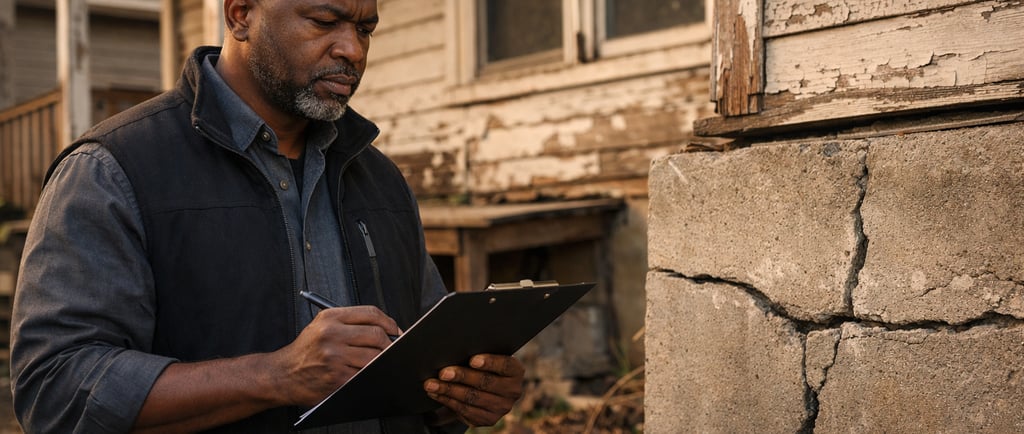
Buying a fixer-upper without checking the foundation is one of the most expensive mistakes you can make as an investor.
Foundation problems can turn a profitable deal into a money pit overnight. Repairs range from $5,000 to over $100,000. And most sellers won't tell you what's hiding underneath.
These foundation inspection tips will help you spot red flags fast, make smarter offers, and protect your profit margin before you close.
Why Foundation Inspections Matter for Investors
The foundation holds everything up. When it fails, nothing else in the property matters.
Structural issues affect:
Your rehab budget
Your ARV (after-repair value)
Your ability to get financing
Your timeline to flip or rent
According to the International Association of Certified Home Inspectors (InterNACHI), foundation problems are among the most commonly missed — and most expensive — issues in residential properties.
Skipping this step doesn't save time. It costs money.
Here are the five things you must check before making an offer.
1. Foundation Inspection Tips for Identifying Cracks
What to Check
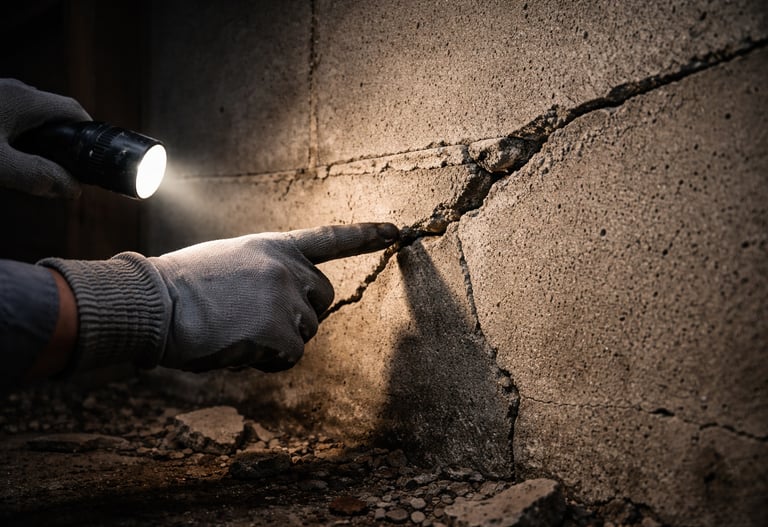
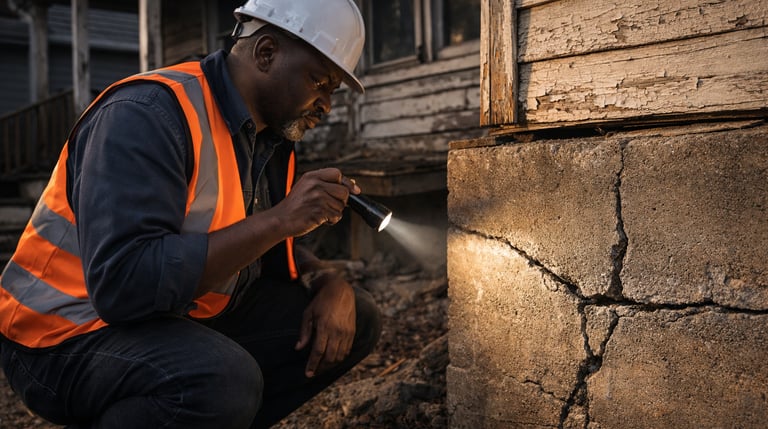
Walk the full perimeter of the property. Look at every inch of exposed foundation. Then go inside and check basement walls and floor slabs.
Look for:
Horizontal cracks (most serious)
Diagonal stair-step cracks
Vertical cracks wider than 1/4 inch
Cracks that are growing or have been patched multiple times
What It Means
Not all cracks are equal.
Hairline vertical cracks — often normal settling, low risk
Diagonal cracks — possible soil movement or settling, moderate risk
Horizontal cracks — lateral pressure from soil, high risk of wall failure
Wide or growing cracks — active structural movement, red flag
Investor Action Step
Photograph every crack. Measure the width. Bring in a structural engineer before you finalize your offer. Factor repair costs into your max allowable offer (MAO).
2. Foundation Inspection Tips for Uneven Floors
What to Check
Walk every room slowly. Pay attention to how the floor feels underfoot.
Use a simple marble test — place a marble on the floor and watch which direction it rolls.
Also look for:
Visible slopes or dips
Gaps between the floor and baseboards
Squeaking or bouncing in specific areas
Tile that has cracked or separated
What It Means
Uneven floors often signal foundation settlement. One area of the foundation is sinking while another stays in place.
This creates uneven load distribution across the structure. Left untreated, it gets worse and spreads to walls and ceilings.
Investor Action Step
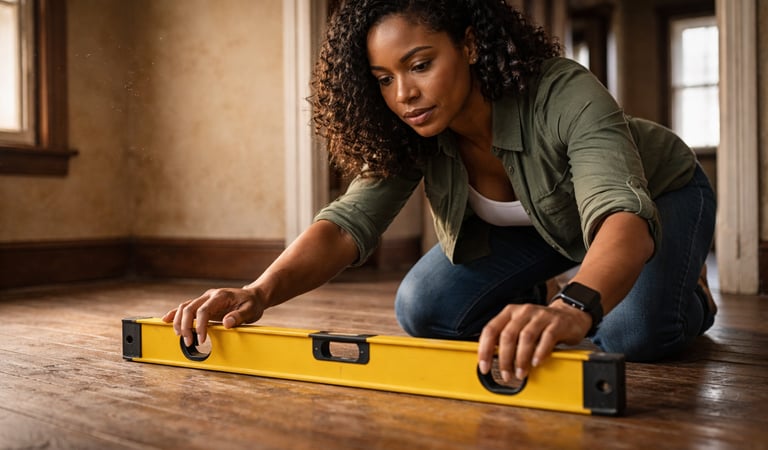
Bring a 4-foot level to every property. Document the degree of slope in each room. Anything beyond 1 inch per 8 feet should trigger a structural evaluation.
3. Foundation Inspection Tips for Spotting Water Damage
What to Check
Water and foundations don't mix. Check both inside and outside the property.
Outside, look for:
Poor grading (ground sloping toward the home)
Gutters that dump water near the foundation
Staining or white mineral deposits on exterior walls
Pooling water around the perimeter
Inside, look for:
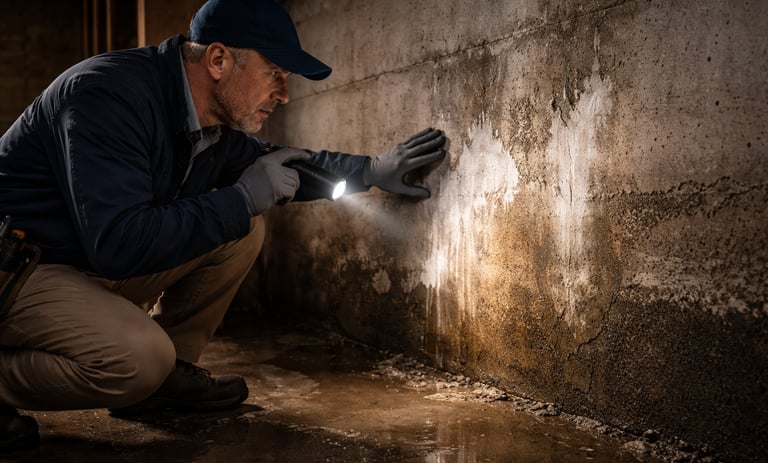
Efflorescence (white chalky deposits on basement walls)
Rust stains near floor drains
Mold or mildew odor
Waterproof paint applied to basement walls (often a cover-up)
What It Means
Repeated water intrusion weakens concrete over time. It also causes hydrostatic pressure — water pushing against the foundation from the outside.
FEMA identifies poor drainage as one of the leading causes of foundation failure in residential structures.
This can lead to wall bowing, cracking, and full structural compromise if not addressed.
Investor Action Step
Check for drainage issues during or after a rainstorm when possible. Get a waterproofing estimate separately from your structural repair estimate. Budget both before making your offer.
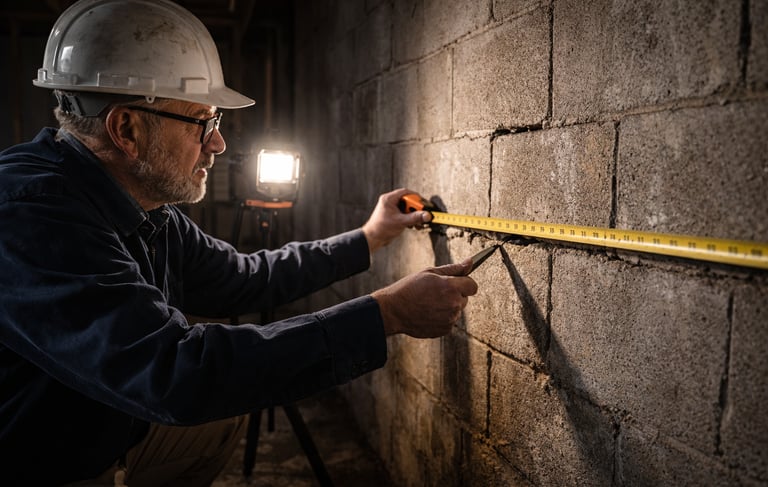
4. Bowing Walls
What to Check
Go into the basement or crawl space and look directly at the walls.
Signs of bowing include:
Walls that visibly curve inward
Horizontal cracks running across the middle of the wall
Wall sections that appear pushed in at the center
Steel beams or rods that were installed as previous repairs
What It Means
Bowing walls are a serious structural red flag. They indicate that lateral soil pressure is pushing the foundation wall inward.
This is most common in older block or brick foundations. Once a wall bows beyond 2 inches, the risk of collapse increases significantly.
The American Society of Home Inspectors (ASHI) recommends immediate evaluation by a licensed structural engineer for any visible wall deflection.
Investor Action Step
Do not rely on visual estimates alone. Have a structural engineer measure the degree of bowing. Repairs can include carbon fiber straps, wall anchors, or full wall replacement. Costs vary widely — get three quotes.
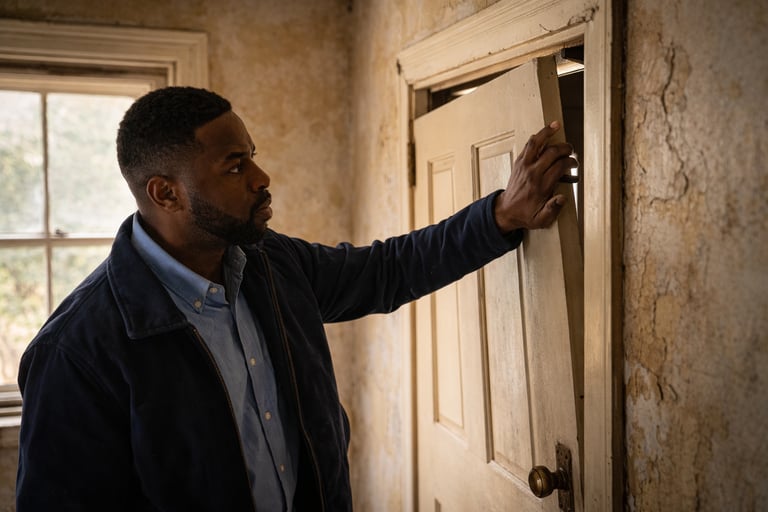
5. Doors and Windows That Stick or Won't Close
What to Check
Test every exterior and interior door. Open and close every window.
Pay attention to:
Doors that drag on the floor or frame
Doors that won't latch without force
Windows that are painted shut versus structurally stuck
Gaps at the top corners of door frames
Visible daylight around closed exterior doors
What It Means
When a foundation shifts, the entire frame of the house moves with it. Doors and windows are the first place you see it.
Sticking doors on one side of the house often indicate localized settlement. Sticking doors throughout the property suggest widespread foundation movement.
This is one of the fastest foundation inspection tips you can use during an initial walkthrough — no tools required.
Investor Action Step
Make a simple map of the property. Mark every door and window that sticks. Look for patterns. Clustering on one side of the home or along one wall narrows down where the foundation issue originates.
Bonus: When to Call a Professional
Your walkthrough can identify red flags. But only a licensed professional can tell you what those red flags actually cost.
Call a structural engineer or certified home inspector when you see:
Any horizontal or diagonal cracks wider than 1/4 inch
Visible bowing in any wall
Multiple sticking doors or windows throughout the property
Evidence of previous foundation repairs
Any active water intrusion in the basement or crawl space
A professional inspection typically costs $300–$700. That's a small price compared to a $40,000 surprise after closing.
InterNACHI-certified inspectors are trained specifically to evaluate structural and foundation conditions. Use their inspector directory to find qualified professionals in your market.
Investor Foundation Checklist
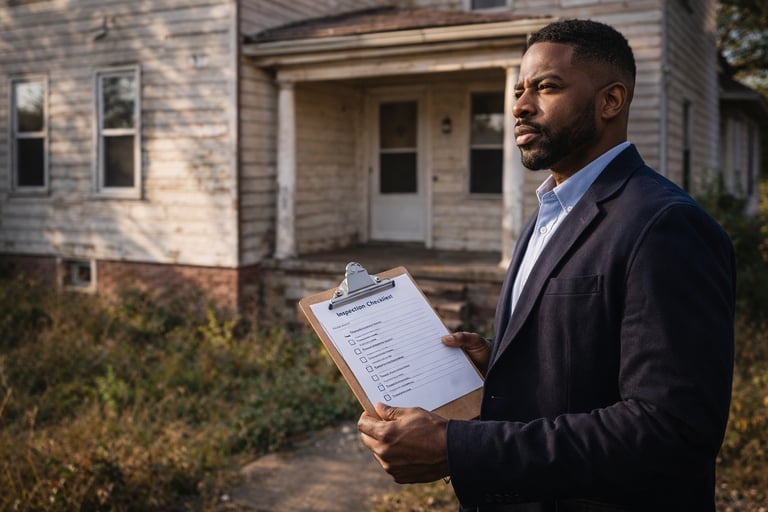
Use this at every property walkthrough.
Exterior
[ ] Full perimeter walk completed
[ ] Cracks photographed and measured
[ ] Grading and drainage evaluated
[ ] Gutters and downspouts checked
[ ] Staining or efflorescence on exterior walls noted
Interior / Basement
[ ] All basement and crawl space walls inspected
[ ] Bowing or deflection checked
[ ] Water intrusion evidence documented
[ ] Floor slope tested with level
[ ] Mold or musty odor noted
Doors and Windows
[ ] Every door opened and closed
[ ] Every window tested
[ ] Problem areas mapped by location
Next Steps
[ ] Professional inspection scheduled if red flags found
[ ] Repair estimates collected before finalizing offer
[ ] Foundation costs factored into MAO
.
Get a Professional Property Verification Report Before You Buy
You don't have to guess what's wrong with a property.
Second Build LLC provides fast, investor-focused property verification reports that give you clear documentation on structural conditions — including foundation red flags — before you commit to a deal.
What you get:
Detailed foundation and structural assessment
High-quality photos documenting every issue
A clear, easy-to-read report built for investors
Fast turnaround so you don't lose the deal
Why investors trust us:
We understand your timeline
We speak your language — no fluff, just facts
Our reports are built to support your offer decisions
Ready to protect your next deal?
📞 Call us now: 800-760-0086
🔗 Order your report: https://secondbuildllc.com/property-verification-report
Don't close blind. Get the facts first.
Property Verification & Field Inspections for Real Estate Investors
info@secondbuildllc.com
+1-800-760-0086
© 2026. All rights reserved.