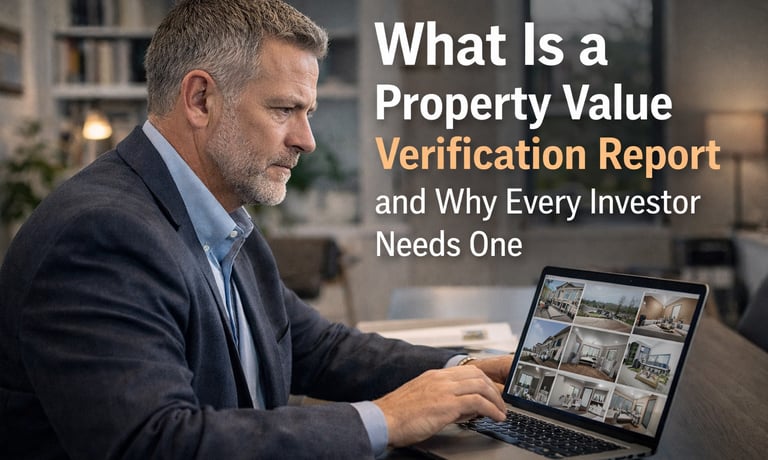
What Is a Property Value Verification Report and Why Every Investor Needs One
Don't close blind. A property verification report shows real condition, repair costs, and ARV data before you commit. Every investor needs one.
3/22/20265 min read

You found a deal. The numbers look solid on paper. The seller is motivated. You are ready to move.
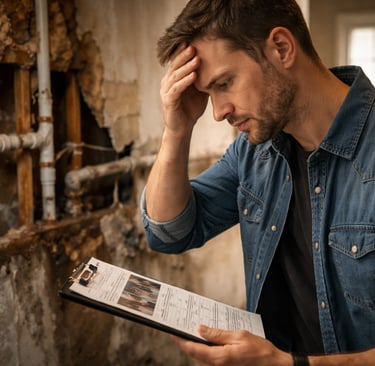
Then you close. And two weeks later, you are standing inside a property with a $40,000 repair bill you never saw coming.
That is not bad luck. That is what happens when you skip a property verification report.
This guide breaks down exactly what this report is, what it covers, and why serious real estate investors use it on every single deal before putting money on the table.
What Is a Property Value Verification Report
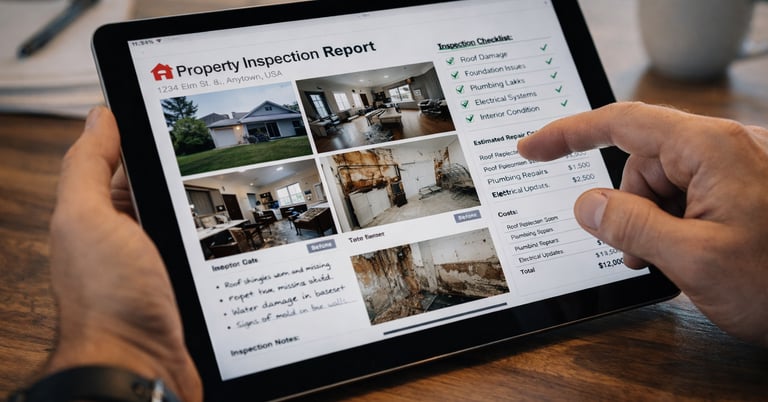
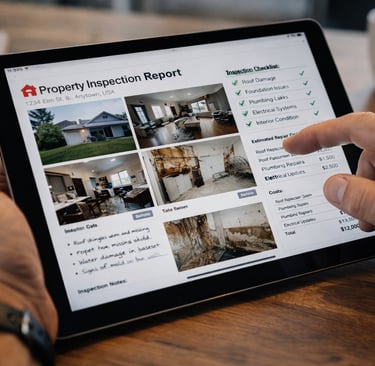
A property verification report is a detailed on-the-ground assessment of a property's current condition and estimated market value. A trained inspector or field agent visits the property, documents everything they find, and delivers a full report back to you.
You get real facts. Not listing photos. Not seller estimates. Not guesses.
What the Report Includes
Exterior condition assessment including roof, siding, and foundation
Interior walkthrough with documentation of damage or needed repairs
Estimated repair costs broken down by category
Neighborhood evaluation and market activity
Comparable sales data to confirm your ARV
Photo and video evidence of the property's actual state
Real-World Example
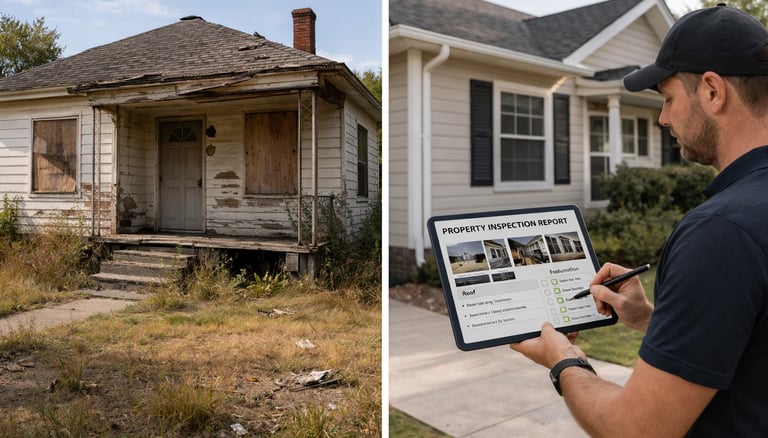
Say you are looking at an off-market single-family home in a market you do not live in. The seller sends photos and tells you the roof is fine. Your property verification report comes back showing the roof has three years left and the HVAC is failing. Suddenly your repair estimate jumps by $18,000. You renegotiate the price or walk away. Either way, you win.
Why Investors and Wholesalers Use It
Real estate investors and wholesalers move fast. Speed is part of the business. But speed without data is how you lose money.
Avoid Bad Deals Before They Cost You
Most bad deals look fine from the outside. Photos are selective. Sellers are motivated to close. A property verification report removes the guesswork and shows you exactly what you are buying into.
Confirm Your ARV With Confidence
Your after-repair value drives everything. If your ARV is off by even 10%, your whole deal math falls apart. A field report includes local comparable sales so you can verify your numbers against real market data, not wishful thinking.
Build Confidence Before Closing
When you have a full report in hand, you can close with confidence. You know what the property needs. You know the numbers hold up. That confidence is worth more than any single deal.
What Is Included in a Property Verification Report
A quality report from a property inspection service gives you a full picture. Here is what to expect:
Exterior condition: Roof age, gutters, siding, windows, driveway, and curb appeal
Interior walkthrough: Every room documented with notes on damage, deferred maintenance, and red flags
Repair estimates: Line-item breakdown of what it will cost to bring the property to standard
Neighborhood check: Block condition, vacancy rates, nearby listings, and general market activity
Comparable sales insight: Recent sold properties in the area to validate your ARV calculation
Photo and video evidence: Visual documentation of everything the inspector finds, timestamped and organized
How It Helps You Make Better Decisions
Saves You Money
Catching a $25,000 foundation issue before you close costs you nothing but the price of the report. Missing it after closing costs you everything. The math is simple.
Prevents Surprises
Surprises in real estate are almost never good ones. A verification report eliminates the unknowns before you are legally and financially committed to a property.
Speeds Up Deal Analysis
Instead of back-and-forth with sellers and contractors, you get one organized document. You review it, run your numbers, and make a decision. The report replaces days of uncertainty with hours of clarity.
Are you guessing on your deals or working with real data?
If you cannot answer that with confidence, you need a property verification report on your next deal.
According to BiggerPockets, one of the biggest mistakes new investors make is underestimating repair costs on distressed properties. A property verification report directly solves that problem.
Who Needs a Property Verification Report
This report is not just for beginners. Experienced investors use it on every deal. Here is who benefits most:
Out-of-state investors who cannot physically visit the property before making an offer
Wholesalers who need accurate repair data to price their deals correctly and protect their buyers
Fix and flip buyers who need precise repair estimates to calculate true profit margins
Buy and hold investors who need to understand deferred maintenance and long-term capital needs before acquiring a rental
If you are working with off-market deals or running distressed property analysis, this report is not optional. It is essential.
Zillow Research consistently shows that property condition is the number one factor driving final sale price variance. What you do not know will hurt your returns.
Real Example Scenario
Here is how this plays out in the real world.
Without a Verification Report
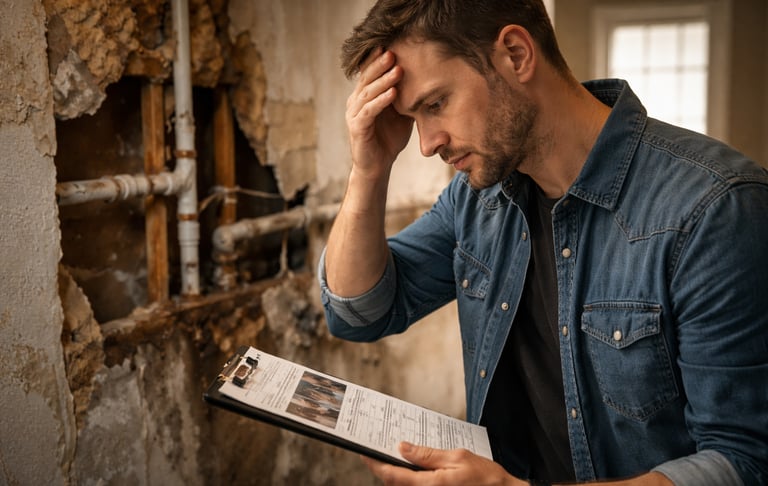
Marcus finds a three-bedroom single-family home through a wholesaler. The photos look decent. The seller says it needs light cosmetic work. Marcus runs his numbers, sees a solid margin, and closes in 14 days. Once he gets inside with a contractor, the reality hits. The basement has water infiltration. The electrical panel is from the 1970s and needs a full replacement. The kitchen subfloor is rotted out beneath the vinyl. What Marcus thought was a $30,000 rehab turns into $74,000. His projected profit of $28,000 becomes a $16,000 loss. He had no idea until it was too late.
With a Verification Report
Marcus orders a property verification report before closing. The inspector documents the water infiltration, flags the electrical panel, and photographs the subfloor damage. The report comes back with an estimated repair cost of $68,000 to $75,000. Marcus goes back to the seller, shows the report, and renegotiates the purchase price down by $38,000. His numbers work again. He closes with full awareness of what he is walking into and builds his contingency accordingly. The report cost him $175. It saved him tens of thousands.
Cost vs Risk Breakdown
Let us put the numbers side by side so this decision is obvious.
With a property verification report: $150 to $300. You get a full picture before you close. You can negotiate or walk away.
Without one, and the deal goes bad: $10,000 to $80,000 or more in unexpected repairs, blown margins, and potential loss.
Renegotiation power with the report: No extra cost. Use the findings to get a better purchase price.
A small upfront cost gives you large-scale protection. There is no logical reason to skip it on any deal.
According to the Redfin Data Center, distressed properties sell at an average discount of 15 to 20 percent below market value. But buyers who skip due diligence on condition often erase that discount entirely through unforeseen repair costs.
Ready to Stop Guessing
on Your Deals?
Book your Property Value Verification Report today
and make every deal decision with hard data behind it.
Call or text 800-760-0086


Property Verification & Field Inspections for Real Estate Investors
info@secondbuildllc.com
+1-800-760-0086
© 2026. All rights reserved.