
11 Tips for Navigating Declining Industries in 2026
Learn 11 practical strategies to stay employed in declining industries in 2026. Build career resilience, develop transferable skills, and adapt to job market changes.
3/9/20264 min read

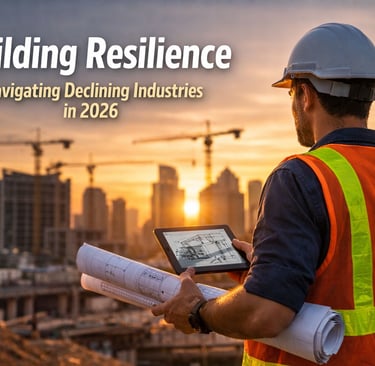
Industries change. Construction workers see this every year. Materials change. Tools change. Regulations change. The workers who remain employed are the workers who adjust.
Careers follow the same pattern.
Across the United States in 2026, industries continue to shift due to automation, artificial intelligence, economic pressure, and technology adoption. Some industries expand. Some contract. Others transform into something different from what they were ten years ago.
Tradespeople, estimators, project managers, inspectors, and technicians all face the same challenge. Career stability depends on adaptability, financial planning, and skill development.
Workers employed in declining industries face income instability and fewer job opportunities. The solution involves preparation, skill expansion, and industry awareness.
This guide explains practical steps workers can take to remain competitive in a changing job market.
1. Embrace the Blueprints of Change
Every construction project begins with a blueprint. Plans evolve during the project. Workers adjust and continue the build.
Careers operate the same way.
Technology changes how industries function. Workers who study new tools maintain their value in the labor market.
Construction technology now includes:
AI assisted building design
Building information modeling (BIM)
prefabricated modular construction
energy efficient materials
smart building systems
Learning these systems improves job security.
The construction industry alone added over 197,000 jobs in 2025 according to the U.S. Bureau of Labor Statistics.
Source:
U.S. Bureau of Labor Statistics
https://www.bls.gov/ooh/construction-and-extraction/home.htm
Workers who monitor industry trends gain an advantage.
2. Build a Financial Safety Scaffold
Financial stability supports career transitions.
Workers who maintain emergency savings handle layoffs and industry slowdowns with less pressure.
Financial planners recommend three to six months of living expenses in savings.
Strong financial habits include:
reducing unnecessary expenses
paying down high interest debt
building emergency savings
maintaining steady income streams
A financial cushion creates time to evaluate job opportunities instead of accepting the first option available.
Financial literacy resources:
Consumer Financial Protection Bureau
https://www.consumerfinance.gov
3. Showcase Your Craftsmanship
Construction workers build physical proof of skill. Employers prefer evidence of experience.
A professional portfolio increases hiring potential.
Build a digital portfolio that includes:
before and after project photos
client testimonials
contractor certifications
safety training credentials
specialized trade skills
Platforms such as LinkedIn allow professionals to display projects and recommendations.
Professional networking resource:
LinkedIn
https://www.linkedin.com
Employers review digital portfolios during hiring decisions. Workers with documented projects gain stronger credibility.
4. Stay Connected. Professional Relationships Create Opportunity
Professional relationships influence hiring decisions.
Construction workers receive many job opportunities through referrals. Contractors hire people they trust.
Maintain your network by:
contacting former coworkers
speaking with subcontractors
attending trade events
joining professional organizations
Construction associations provide networking and training opportunities.
Example organization:
Associated General Contractors of America
https://www.agc.org
Strong relationships often lead to job referrals before positions appear publicly.
5. Keep Looking Even When Work Feels Stable
Job markets shift quickly. Workers who monitor job openings remain prepared.
Simple habits improve career awareness:
update your résumé quarterly
track hiring trends in your trade
monitor company expansions
review job listings weekly
Labor market data shows that industries experiencing decline often reduce hiring months before layoffs begin.
Job trend tracking resource:
Indeed
https://www.indeed.com
Workers who monitor job demand respond faster to market changes.
6. Focus on Transferable Skills
Workers develop skills that apply across multiple industries.
Transferable skills improve career mobility.
Common construction transferable skills include:
project coordination
problem solving
safety compliance
client communication
time management
logistics planning
These skills apply to other industries such as:
real estate operations
facilities management
logistics supervision
property management
manufacturing operations
Workers with adaptable skills move between industries more easily.
7. Stay Flexible. Industries Transform
Industries rarely disappear completely. They evolve.
Construction illustrates this transformation clearly.
Modern construction now includes:
drone site surveying
3D building modeling
smart home installation
green building retrofits
building automation systems
Energy efficient construction alone continues to expand as governments increase environmental regulations.
Industry research resource:
U.S. Green Building Council
https://www.usgbc.org
Workers who study new building technologies remain competitive.
Avoiding Declining Industries: Career Strategy for 2026
8. Plan Ahead Like a Project Manager
Project managers monitor budgets, labor costs, and supply chains.
Workers benefit from monitoring industry health using the same discipline.
Track indicators such as:
job growth forecasts
automation trends
regional economic development
labor shortages
Labor market projections help workers identify industries with long term growth.
Labor projection resource:
Workers who plan ahead reduce career disruption.
9. Keep Learning. Skills Expire Without Training
Training strengthens long term career stability.
Industries now expect workers to update skills regularly.
High value training areas include:
energy efficient construction
project management certification
building automation systems
safety compliance training
construction technology software
Training platforms offer accessible education.
Example learning platform:
Coursera
https://www.coursera.org
Workers who invest in training maintain higher earning potential.
10. Choose Work That Matches Your Strengths
Industry growth matters. Skill alignment matters equally.
Workers perform better when their strengths match their role.
Evaluate:
technical ability
physical work preference
leadership potential
long term income goals
Career satisfaction increases when skills and responsibilities align.
The best career paths combine opportunity with personal capability.
11. Talk to Workers in the Field
Research reports provide useful data. Conversations reveal daily reality.
Speak with workers currently employed in the field.
Ask about:
hiring demand
job stability
technology adoption
training requirements
income potential
Local contractors, trade schools, and union representatives often provide accurate industry insight.
Trade education resource:
National Center for Construction Education and Research
https://www.nccer.org
Direct experience provides information not available in reports.
Final Thoughts: Reinforce Your Career
Industries shift. Workers who prepare remain stable.
Career resilience depends on three priorities:
financial preparation
skill development
professional relationships
Construction workers understand reinforcement. A structure remains strong through maintenance and improvement.
Careers require the same attention.
Workers who adapt, study industry trends, and strengthen their professional network maintain long term employment even when industries decline.


Property Verification & Field Inspections for Real Estate Investors
info@secondbuildllc.com
+1-800-760-0086
© 2026. All rights reserved.